Korean can-do
The new Hyundai Tucson has been nominated for the 2017 South African Car of the Year award. Is it as good as everyone thinks it is?
Here on the southern tip of Africa, we often get it wrong. Some of us managed to work out that Hyundai is pronounced “Yan-dei†as opposed to “Huh-yoondaiâ€, but before we could get a grip on “Tuck-sonâ€, Hyundai changed the name to ix35. That was back in 2009 and nobody complained because it saved us from embarrassment.
Now the “Too-sohn†is back, shrugging off the previous mixed case nomenclature, and it’s selling like hot cakes. At least 400 units find happy homes every month and South Afri can female motoring journalists have already declared it Women’s Car of the Year.
With respect to my colleagues’ reasoning, I must mention that when it comes down to brass tacks, there’s very little difference between a Tucson and the mass of SUVs already out there.
Park a Renault Kadjar (also being considered for 2017 Car of the Year), Ford Kuga, KIA Sportage, Mazda CX-5, Mitsubishi ASX, Honda CR-V, Toyota RAV4 and Nissan’s Qashqai and X-Trail next to each other and tell me I’m wrong.
So why choose a Tucson over the others? To find out, I climbed behind the wheel of the 1.6 T GDi Elite with dual clutch transmission (DCT) and all-wheel drive.
The interior? The Tucson stacks up well against its competitors, especially if you choose the Elite model, which comes with a better dashboard and a bigger touch screen than the standard Premium model. The trim is almost at the level of the Tucson’s more expensive big brother, the Hyundai Santa Fe.
Is it more luxurious than its opponents? Tastes differ. What is undeniably true is that the Tucson offers more luggage room than the old ix35, and it has a bigger boot than many of its rivals besides the Nissan X-Trail and the Honda CR-V (both of which can probably squeeze in a backpack more).
The exterior? In pictures, the Tucson doesn’t look particularly big. It’s a different story once you stand next to it: the 1,6 m roofline is nearly head-high.
The Tucson is also a teensy bit longer than the Renault Kadjar, the Nissan Qashqai and the KIA Sportage, but the Nissan X-Trail out-stretches it by 16 cm.
Out front is the Tucson’s distinctive feature: a wide hexagonal grille. Peter Schreyer, Hyundai’s chief designer, says that this grille will henceforth become a “brand signatureâ€.
What’s the ride like? You might be surprised to learn that a modern 1.6-litre engine can produce twice as much power as your dad’s mighty 1970s GM Ranger. This Hyundai can hustle!
The DCT gearbox also changes gears smoothly and more efficiently than a standard automatic gearbox.
The suspension is firm to prevent excessive body roll through the bends, but it won’t come close to rattling your teeth, and the all-wheel-drive system is effective on sand and mud provided you have all-terrain tyres fitted.
I tested the Tucson in the dunes at Atlantis near Cape Town. By pressing the “4WD Lock†button and dea ctivating traction control, I had no problem staying on top of the sand.
Considering this kind of versatility, coupled with obvious driving pleasure, I’m beginning to understand why the Tucson is gathering accolades…
Models? There are two 1.6-litre petrol engines to choose from: the 1.6 T GDI Elite DCT AWD (tested here) and the 1.6 Executive with front-wheel drive only. Entry level models include the 2.0 Nu Premium (manual or automatic) and the 2.0 Elite (auto only).
Two diesel models were introduced in November 2016: the 1.7 UII Executive (manual only) and the R2.0 Elite (auto only). The Executive is built in the Czech Republic to meet Euro 6 emission st andards; the Elite comes directly from South Korea and complies with more lenient Euro 2 standards.
I drove the 1.7-litre Executive at the coast and it wasn’t very impressive. The 1.6-litre turbocharged petrol model is a much better option. The 1.7 delivers sufficient torque to get the job done, but it’s hardly thrilling.
If you live on the Highveld you should consider the more powerful 2.0-litre Elite, provided you don’t care too much about polluting the atmosphere.
| VITAL STATISTICS | 1.6 T GDI Elite DCT AWD | 1.7 UII Executive |
| Engine | 1 591 cc inline 4, petrol | 1 591 cc inline 4, diesel |
| Power | 130 kW @ 5 500 rpm | 85 kW @ 4 000 rpm |
| Torque | 265 Nm @ 4 500 rpm | 280 Nm @ 1 250 rpm |
| 0 â€" 100 km/h | 9,2 seconds | 13,7 seconds |
| Top speed | 203 km/h | 176 km/h |
| Fuel consumption | 8,5 â„"/100 km | 6,8 â„"/100 km |
| Tank | 62 â„" | 62 â„" |
| Drive type | All-wheel drive | Front-wheel drive |
| Transmission | 7-speed automatic | 6-speed manual |
| Ground clearance | 172 mm | 172 mm |
| Towing weight | 750 kg (1 600 kg braked) | 750 kg (1 400 kg braked) |
| Luggage capacity | 488 â„" (1 478 â„" seats do wn) | 488 â„" (1 478 â„" seats down) |
| Warranty | 5 years/150 000 km | 5 years/150 000 km |
| Service plan | 5 years/90 000 km | 5 years/90 000 km |
| Service intervals | 15 000 km | 15 000 km |
| Price (December 2016) | R519 900 | R439 900 |
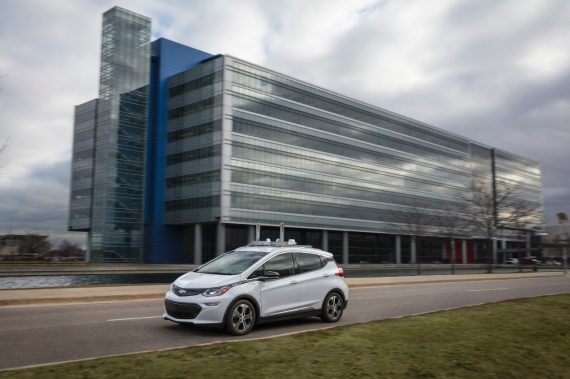


 The New 2014 Ford Edge SUV muscles car coming with Eight trims we share with you base trim specification and features here. Base features build with 3.5 liter V6 engine produce 285 hp @ 6.5k rpm max power.


 < /p>
< /p>


